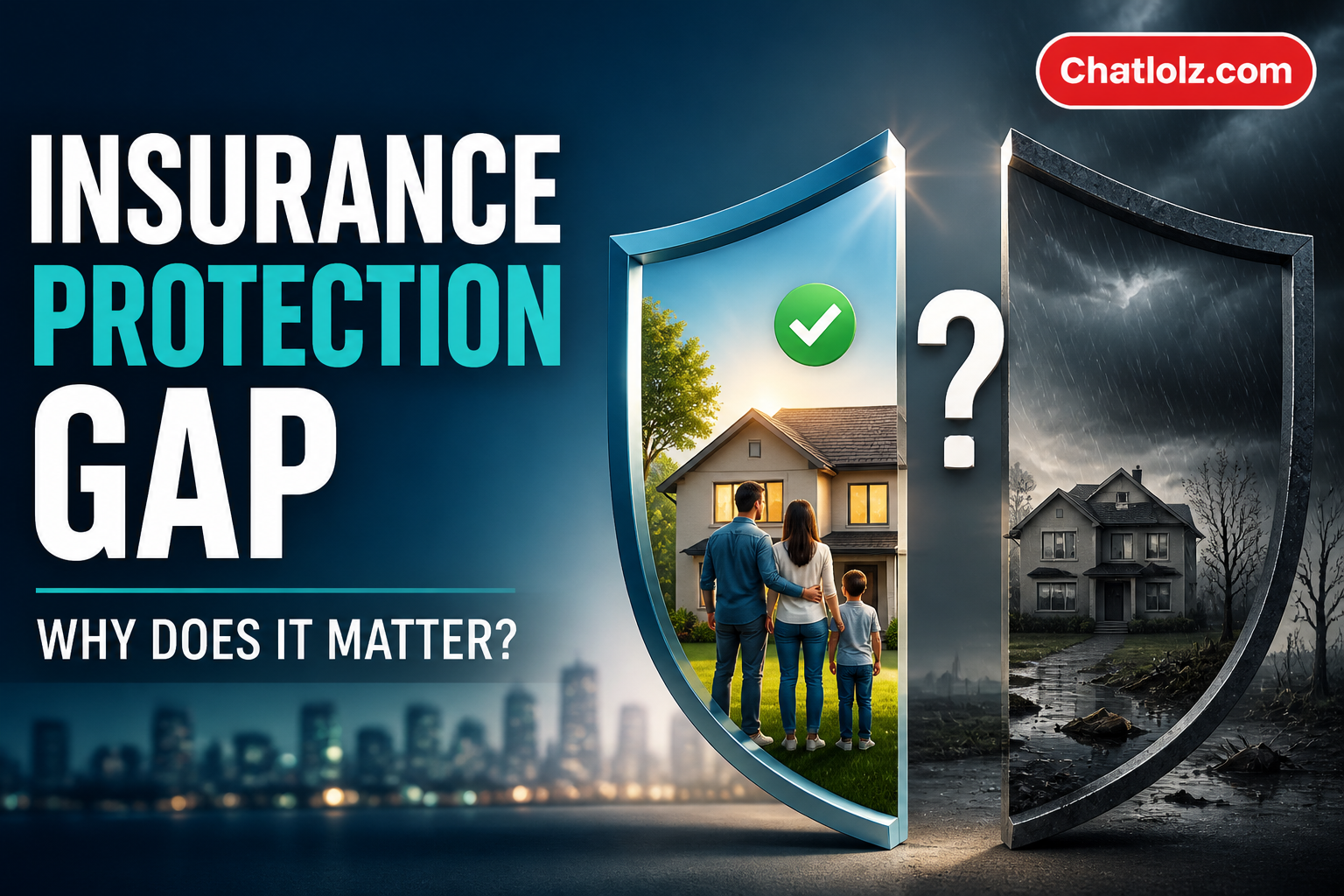
Insurance can help protect a household, business, or community from the financial impact of a serious loss. But having a policy does not mean every cost is covered. An insurance protection gap is the portion of a risk or loss that remains uninsured. It can arise when someone has no policy for a particular risk or when existing coverage is too limited to meet the full cost of recovery. The term is especially common in discussions of natural disasters, but the same idea applies to many kinds of insurance. Understanding the gap can help you see what you may need to pay yourself and where a policy review could help.
What does an insurance protection gap mean?
In plain language, the protection gap is the difference between the financial losses a person, business, or society faces and the portion of those losses protected by insurance. The uninsured portion may involve a risk for which no policy exists, a loss that falls outside a policy’s terms, or costs above the amount the insurer will pay.
The term is often used to discuss natural catastrophes such as floods, storms, or earthquakes. After a damaging event, total economic losses may be much larger than insured losses. Swiss Re’s natural-catastrophe research illustrates this comparison. The EIOPA dashboard monitors natural-catastrophe insurance protection gaps in the European Union. It is not a measure of every insurance shortfall or a global estimate.
The same basic concept can apply to health, life, home, vehicle, disability, and business insurance. How a gap is defined or measured depends on the risk being examined and how losses and coverage are counted.
How is a protection gap different from a deductible or policy limit?
A deductible, coverage limit, and exclusion are specific policy terms. A protection gap is the broader amount of exposure left without insurance protection. These terms can contribute to a gap, but they are not interchangeable.
- Deductible or excess: The amount you pay under the policy before the insurer contributes, subject to the policy’s terms.
- Coverage limit: The maximum amount the insurer will pay for a covered loss or category of loss. Costs beyond the applicable limit may be your responsibility.
- Exclusion: A cause, item, or circumstance the policy does not cover. A loss linked to an exclusion may not qualify for payment.
- Underinsurance: Having a policy with coverage that may be too small for the value of the exposure or the cost of recovery.
- Uninsured loss: A loss for which no insurance payment is available, either because there is no relevant policy or because the loss does not qualify under an existing one.
A person can have a policy and still face a meaningful protection gap. For instance, a home policy may cover some damage while excluding a particular hazard, or a business policy may have a limit below the cost of replacing equipment and resuming operations. The exact outcome depends on the policy wording, local rules, and the facts of the claim.
What causes insurance protection gaps?
There is rarely just one cause. Gaps can result from decisions, affordability constraints, limited availability, policy design, or changes in the risk itself.
- Affordability: Premiums may be difficult to manage, so a person or business may go without cover, choose a lower limit, or let a policy lapse.
- Lack of awareness: People may not know which risks are excluded, what a policy covers, or how much insurance they would need to recover.
- Limited availability: In some places or for some risks, coverage may be difficult to obtain or offered with conditions that do not fit the exposure.
- Exclusions and eligibility rules: A policy may not respond to certain causes, property, activities, or situations. The policy document sets out the applicable wording and conditions.
- Low limits or high out-of-pocket costs: A limit may be lower than the cost of rebuilding, replacing assets, or meeting other covered expenses. Deductibles also mean the policyholder pays an initial share of a covered claim.
- Changing circumstances: A renovation, new asset, growing business, change in family responsibilities, or higher replacement costs can make existing coverage less suitable.
- Underestimated or changing risks: People may make coverage decisions based on past experience, even when their exposure or potential recovery costs have changed.
These are possible sources of uncovered costs, not a universal formula. Whether a specific situation represents a protection gap depends on the risk and the insurance contract.
Why does the protection gap matter?
When a loss occurs, the uninsured share does not disappear. Someone has to absorb it, though the source of funds will vary. A household might use savings, borrow money, delay repairs, or seek assistance. A business may need to fund repairs and replacement assets while managing lost income or interrupted operations. Communities and governments may face greater pressure to support recovery when many losses are uninsured.
The effects can extend beyond the first bill. A household that spends a large share of its savings on repairs may have fewer resources for other needs. A business that cannot quickly replace essential equipment may struggle to resume normal operations. These are potential consequences, not guaranteed outcomes; the impact depends on the size of the loss, available resources, insurance terms, and other forms of support.
At a wider level, protection gaps can help insurers, regulators, and public authorities identify where people or businesses may be especially exposed. The EIOPA dashboard is one example of a tool for monitoring natural-catastrophe insurance protection gaps in the EU. Its scope is limited and does not measure every kind of gap, such as shortfalls in life, health, or business-interruption insurance.
How can a protection gap be assessed?
A simple starting point is to compare the potential or actual financial loss with the insurance payment available for that loss. At an individual level, ask what it would cost to repair, replace, or recover, and how much the policy would pay if the event happened. Consider deductibles, limits, exclusions, conditions, and any costs the policy does not cover.
For a broad risk assessment, analysts may compare total economic losses with insured losses. The difference can help describe the uninsured share of losses. However, the result depends on the data and definitions used: which events are included, what counts as an economic loss, what period is measured, and how insurance payments are recorded. One figure should not be treated as a universal measure across countries, hazards, or insurance lines.
For your own review, consider the following questions:
| Review question | What to check |
|---|---|
| What could be damaged or lost? | Property, belongings, income, health-related costs, or business assets relevant to your circumstances. |
| What would recovery cost? | A realistic estimate based on current circumstances and costs in your area. |
| What does the policy cover? | Covered risks, limits, deductibles, exclusions, conditions, and claim requirements. |
| What remains for you to fund? | Costs outside the policy or above its applicable limits. |
This is a planning aid, not a guarantee of claim payment. Insurers assess claims under the policy terms and applicable rules.
Practical steps to reduce avoidable gaps
You cannot insure every possible loss, and more coverage is not automatically the right answer for every budget. Still, a structured review can help you make informed decisions.
- List your major financial exposures. Consider the people, property, income, and business operations that would be difficult to replace or restore.
- Read the policy documents. Check the schedule, coverage limits, deductibles, exclusions, eligibility conditions, and any steps required after a loss. Ask for clarification if the wording is unclear.
- Compare limits with current needs. Consider whether the insured amounts still reflect your circumstances and likely recovery costs. Do not assume an old estimate remains adequate.
- Review after major changes. Revisit coverage after moving, renovating, acquiring valuable assets, starting or expanding a business, or experiencing a significant change in household responsibilities.
- Ask about available options. An insurer or qualified adviser can explain potential policy choices, limitations, and costs. Ask specifically which risks remain outside the coverage and what conditions apply.
- Plan for what insurance will not pay. Depending on your circumstances, this may mean considering emergency savings, continuity plans, or other ways to manage residual risk.
A review does not require you to buy additional insurance. It gives you a clearer picture of what you have, what you do not have, and the trade-offs you are making.
Conclusion
An insurance protection gap is the part of a financial risk or loss that insurance does not cover. It may exist because there is no relevant policy or because limits, deductibles, exclusions, or changed circumstances leave costs to be funded elsewhere. The term is widely used in discussions of natural catastrophes, but the underlying idea applies to many kinds of insurance. Reviewing your exposures and policy wording can help you identify potential shortfalls and ask better questions about your options. Insurance can reduce financial exposure, but it cannot prevent hazards or eliminate every loss. Coverage decisions should reflect your circumstances, budget, and the terms available to you.
Frequently asked questions
Is an insurance protection gap the same as being uninsured?
No. Being uninsured for a particular risk can create a protection gap, but a person with a policy can also have one. A deductible, exclusion, or limit below recovery costs may leave some of the loss uninsured.
Are deductibles part of the protection gap?
A deductible is a policy term specifying an amount the policyholder pays before insurance contributes, subject to the policy. It can contribute to out-of-pocket costs, but it is not the same as the broader protection gap.
Is the protection gap only about natural disasters?
No. Natural-catastrophe risk is a common context for the term, but the same concept can apply to home, health, life, vehicle, disability, and business insurance. The definition and measurement depend on the risk being considered.
How can I tell whether I may be underinsured?
Compare your likely financial exposure and recovery costs with the relevant policy limits, deductibles, exclusions, and conditions. If the policy amount may not meet your needs, ask your insurer or a qualified adviser to explain available options.
Can insurance eliminate a protection gap completely?
Not necessarily. Some risks may be unavailable or unaffordable to insure, and policies have terms and limits. Insurance can reduce financial exposure, but it does not prevent hazards or guarantee that every cost will be covered.
Is there one global figure for the insurance protection gap?
No single figure applies to every risk and insurance market. Estimates depend on the losses, coverage, geography, time period, and data included. A natural-catastrophe estimate should not be treated as a measure of life, health, or other insurance gaps.